
Pulaski 72 Hour Release Window
Pulaski County Detention Center publishes a current inmate list, not a historical three-day release list. No official last-72-hours button, archive, retention promise, or weekend release report was located. The distinction matters. A current roster can show that a person appears confined when checked, but it cannot reconstruct all exits since a chosen start time.
The practical replacement is a bounded records request. State the beginning and end date and time. Ask for existing release-log entries within that interval. This is broader than the same-day process and can capture events spread over three calendar dates, including a weekend. It still cannot force the custodian to create a custom list when no such record exists.
Check Pulaski Three-Day Jail Releases
Build the date range before searching. If the goal is Friday evening through Monday morning, write those exact endpoints rather than asking for a vague weekend list.
- Check the official current roster and record the search time. A present match weighs against release at that moment.
- Search Kentucky VINELink for each known person. Separate a release alert from a transfer alert.
- Call the jail at 606-678-0130 for a narrow status question tied to a specific booking.
- Review the Pulaski court docket for release authority, bond, dismissal, sentence, or another order during the interval.
- Mail the jail custodian a request for existing release-log entries from the stated start through end timestamp.
- For a Kentucky DOC offender, review each date in the statewide Daily Releases archive and confirm the status in KOOL.
The Pulaski same-day release process is the better fit when only today's events matter. A three-day records request should remain limited enough to identify the responsive log without demanding every jail file.
Pulaski Three-Day Release Fields
No public Pulaski County three-day table proves which columns are exposed. A focused request can seek these existing fields, subject to lawful redaction and the record that the jail keeps.
| Field | Why it matters |
|---|---|
| Name and booking number | Separates people with similar names and ties the event to one admission |
| Release date and time | Places the exit inside or outside the requested window |
| Release type or authority | Distinguishes bond, time served, court order, or another event |
| Releasing facility | Identifies which custodian processed the event |
| Transfer agency | Shows that custody may have continued elsewhere |
| Booking photograph | Identifies the intake record, but does not prove guilt or present custody |
The state's County/Local Jailer Records Retention Schedule identifies L2751, Inmate Record File. The series can include photographs, court papers, and property slips and is retained until five years after release, then destroyed. Classification and exemptions remain questions for the custodian. Online roster visibility is different from official record retention.
Pulaski Weekend Release Verification
No local source establishes a special weekend or holiday release hour. A three-day window is useful because it spans days when the user may not have checked the current roster, not because Pulaski County promises early Friday processing. Court orders, detainers, identity checks, and jail administration shape each release.
Pulaski County's published 2018 policy says staff verify both legal authority and identity. They check holds and warrants before completing a release. A valid detainer can keep the person confined or cause transfer to another agency. The policy also says the receiving authority signs a transfer receipt. These facts make a destination field important in any multi-day log.
A Monday roster absence cannot reveal whether the person left Friday, Saturday, or Sunday. It also cannot show why. Ask for the jail release time, compare the court order, and check VINE. If the person was serving a Kentucky state sentence, use the state transaction rather than assuming a local bond release.
Pulaski Three-Day Fallback Sources
The strongest local request is addressed to Capt. Kevin Russell, Custodian of Records, Pulaski County Detention Center, 300 Hail Knob Road, Somerset, KY 42503. Ask for a release log between exact timestamps and list desired fields. The jail site does not promise email filing, a web form, a special fee, or same-day production, so none should be assumed.
Kentucky VINE works best for alerts about a specific person. It may report release or transfer from a participating county jail. It does not create a three-day county list and is not a certified record. Telephone and jail-record confirmation still matter when the event type or timing is unclear.
The Kentucky DOC Daily Releases archive provides day-specific PDFs for state offenders. A PDF can name Pulaski County Detention Center in the Released From field. It does not cover the entire Pulaski booking population. Local pretrial releases stay on the jail-and-court track, while state-sentence releases use KOOL and DOC records.
Pulaski Roster Is Present Tense
The lack of a release archive is the key Pulaski County data quirk. The roster's label limits what can fairly be inferred. A person listed now is normally shown as held now, subject to update lag. A person missing now might have left custody, moved to another custodian, or been affected by a record change.
The direct JailTracker endpoint is the best live interface evidence, but its dynamic fields should be read as displayed. Do not promise a release field because another county's version has one. When a former Pulaski entry is gone, the underlying inmate record and court docket become the historical sources.
The Kentucky local-record schedules gateway explains where official retention schedules are maintained.
The state retention-schedule gateway is shown below as the source for locating the correct local schedule.
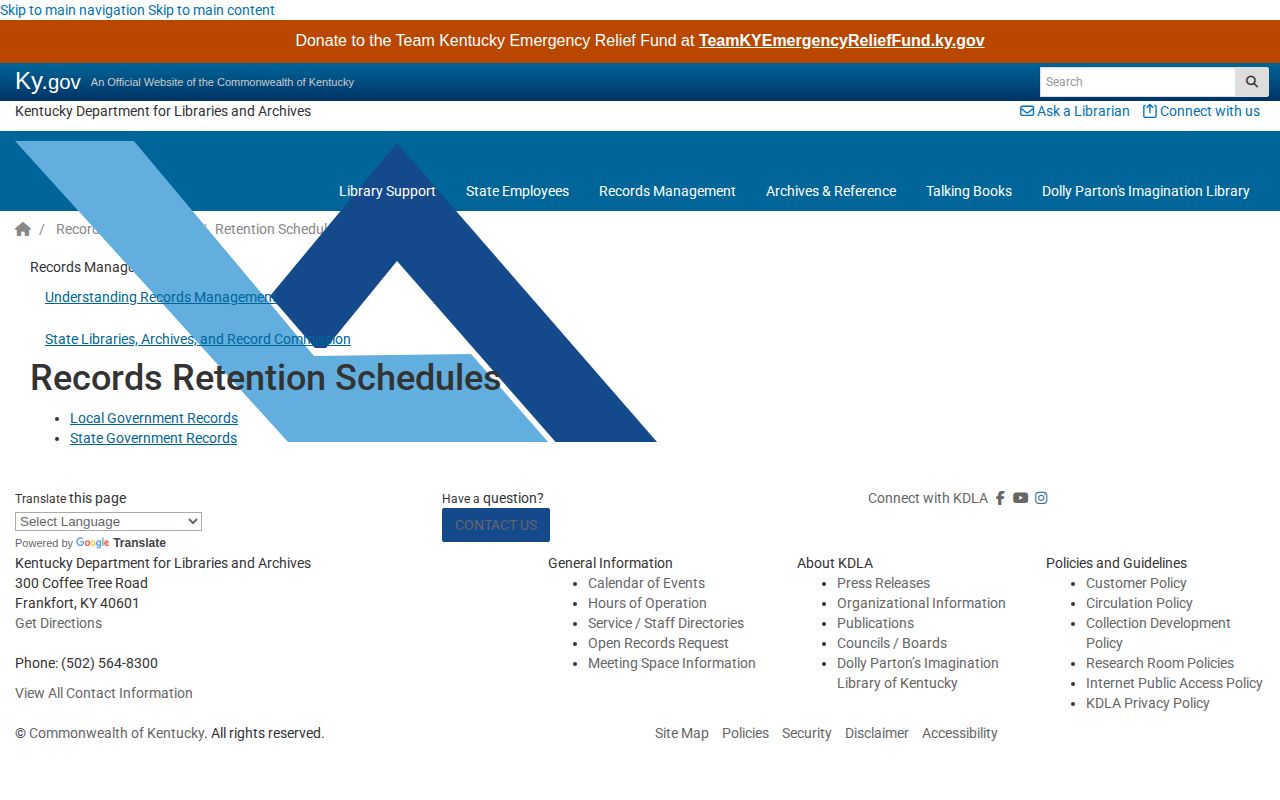
The image reinforces that retention depends on an approved record series, not on how long a current roster page keeps a name visible.
Pulaski Release Record Navigation
A multi-day search can raise questions about which office holds a record or whether a court order changed public access. The AppalReD Legal Aid Somerset office is a local legal-aid contact serving Pulaski County. It is not the jail custodian and does not replace an open-records request.
The Somerset office page is shown below for local navigation.
The office may help eligible people understand legal options, while the jail, court clerk, and Kentucky DOC remain the sources for release facts.
For one named person, the Pulaski County released-inmate search maps the county, state, and federal paths. It is more useful than seeking a broad three-day list when the real question is one person's custody status.
The court and jail records should be read together. A court entry can show the authority for bond, probation, dismissal, or sentence completion, yet it may not record the precise door-exit time. The jail transaction supplies that physical event. If the release type says transfer or detainer, check the receiving agency rather than describing the person as released to the community.
For older Pulaski County events, the present-tense roster becomes less useful. The Office of Circuit Court Clerk can route District and Circuit case copies. An older case may have been moved to a records facility, where the clerk can provide locator details, or destroyed under an authorized schedule. That records-management result does not prove that no earlier booking or release occurred.
A state-sentence transaction also needs care. KOOL may show community supervision after institutional release. The Daily Releases PDF may show parole, mandatory reentry supervision, conditional discharge, or another state label. Each describes a different legal status. A projected date is not proof of an actual event, and no institution shown does not automatically mean full discharge.
Record the date each source was checked and preserve the exact agency wording.
Pulaski State Release Comparison
A three-day Pulaski County search may contain two very different kinds of events. The local jail log can cover a person leaving after bond, dismissal, time served, or another county-custody disposition. Kentucky DOC's Daily Releases archive covers state correctional transactions. It can list Pulaski County Detention Center under Released From because the jail houses state inmates, but that does not make the PDF a complete county release list.
Read the state PDF by date and preserve its Type of Release label. Possible state outcomes include parole, shock probation, mandatory reentry supervision, conditional discharge, sentence completion, or a detainer-related result. Each label carries its own meaning. KOOL can then show whether the person remains under Kentucky DOC supervision. A community status establishes departure from an institution but is not the same as final discharge from the sentence.
The timing rules also differ. KOOL says its information receives daily updates and warns that data newer than 120 days may not be finalized. A newly posted record can therefore change as the agency completes review. For a release that matters within the three-day window, compare the dated PDF, KOOL status, VINE event, and the underlying Pulaski record rather than treating any single screen as immutable.
Federal custody is a third track. The Pulaski jail's mixed population may include a USMS pretrial prisoner or another federal detainee. BOP may have no matching record when USMS, rather than BOP, controls custody. The federal docket and responsible custodian become the release path in that case. A local roster disappearance still cannot establish community release.